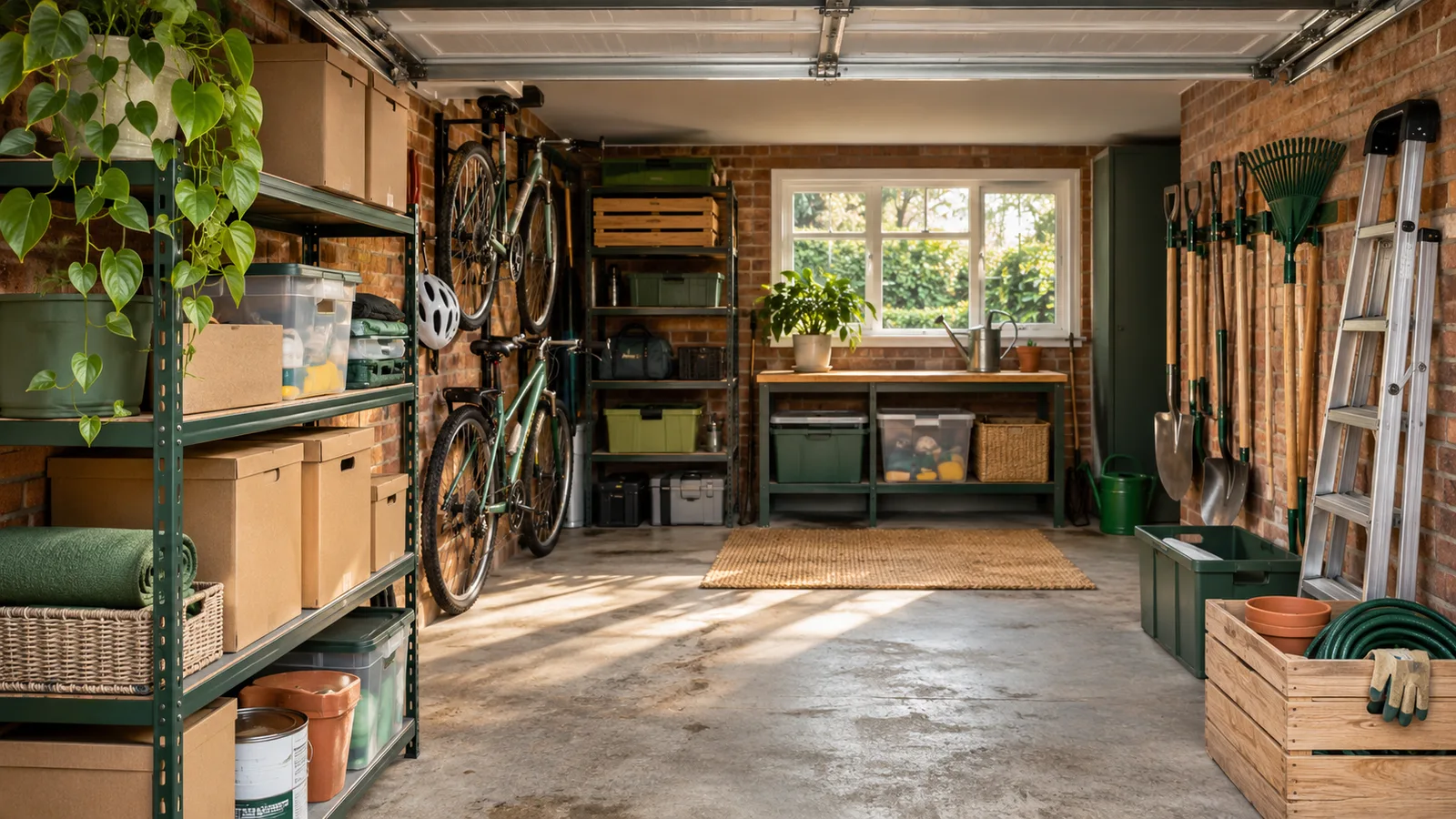
A cluttered garage is easier to tackle when you work in small sections, decide what you want to keep and give each group of belongings a clear home. You do not need to empty the entire garage in one go. Start with a safe walkway and one manageable area, then build from there.
Allow a few hours for a light tidy and more time for a packed garage. You will need gloves, a broom, a cloth, boxes or containers you already own, and a pen and paper for a simple plan.
Where should you start when a garage is full?
Start at the door. Open it, look at the available floor space and identify anything that would make walking or moving items unsafe. Do not attempt to shift heavy equipment, unstable stacks or unfamiliar containers. If you cannot reach a section safely, leave it until suitable help is available.
Pick one small area, perhaps a shelf or a square metre of floor. A quick success is more useful than spreading everything across the driveway and running out of time. Take a photograph beforehand if it helps you remember where larger belongings belong.
Before moving things, decide what you want the garage to do. Should it fit a car, hold bikes, provide a workbench or simply make household storage easier to access? That answer determines which belongings deserve the easiest-to-reach positions.
How do you sort belongings without getting overwhelmed?
Use three decisions: keep here, keep somewhere else, and decide later. You remain in control of what stays. Put uncertain belongings into a small, clearly marked review group rather than letting them halt the entire session.
Work through one category at a time:
- Garden tools and outdoor equipment
- Bicycles, scooters and sports kit
- DIY tools and hardware
- Seasonal decorations and household boxes
- Items awaiting your own decision
Avoid opening every box at once. If a box contains treasured documents or fragile objects, give it a separate, protected place. Keep products with safety warnings in their original containers and follow their labels. Our guide to storing household chemicals safely explains the general precautions.
What order makes the work easier?
Try this repeatable sequence:
- Clear a short route. Make it possible to move safely from the door to your first work area.
- Choose one zone. A single shelf, corner or run of boxes is enough.
- Group similar belongings. Keep related things together so you can see what you own.
- Clean the exposed space. Sweep loose dust and wipe accessible surfaces where safe.
- Return the keepers. Put frequently used items within comfortable reach.
- Move to the next zone. Stop while the garage is still usable, even if you need another session.
This approach keeps the job contained. It also means you can use the garage between sessions instead of living with an unfinished pile.
How should you put everything back?
Think about frequency, weight and access. Everyday items belong near the door or at an easy height. Less-used seasonal belongings can sit further back on existing suitable shelving. Heavy objects should remain low and stable, not above shoulder height.
Choose simple zones such as gardening, tools, sports and seasonal storage. Use your existing shelves, hooks and boxes before buying anything new. Labels help, but they should describe the contents in ordinary language. “Winter decorations” is more useful than “Miscellaneous 4”.
Leave room to open cupboards and doors. If you want to park a car, check the actual clearance with the doors open rather than relying on the garage's overall dimensions. Our garage organisation guide covers zones and easy-to-maintain layouts in more detail.
How do you stop clutter building up again?
Make a short home for every category and return things there after use. A ten-minute check each month can catch overflowing boxes and misplaced tools before they become another large project. Review the “decide later” group on a date you choose.
Try to keep at least one floor route clear. If something new arrives, decide where it belongs before leaving it in the doorway. For a more structured maintenance routine, see our garage cleaning checklist.
Key takeaways
- Work through one small, safe section at a time.
- Decide the garage's purpose before arranging belongings.
- Group items by use and store heavier things low down.
- Reuse existing storage wherever practical.
- Keep a clear walkway and do short monthly resets.
Common questions
Do I have to empty the whole garage first?
No. Working in sections is often more manageable and leaves part of the garage usable throughout the process.
What if I cannot decide whether to keep something?
Put it in a small review group and set a date to decide. Do not let one difficult decision stop everything else.
Can someone help with the cleaning and organising?
Yes. Garage & Storage Cleanouts helps homeowners across the West Midlands with manageable belongings and general cleaning and organisation. You decide what stays.
If you would rather have help, our garage cleanouts service follows four steps: empty manageable belongings, clean accessible areas, organise what you are keeping and put everything neatly back. Packages start from £99, with other work individually quoted. You can request a free quote.