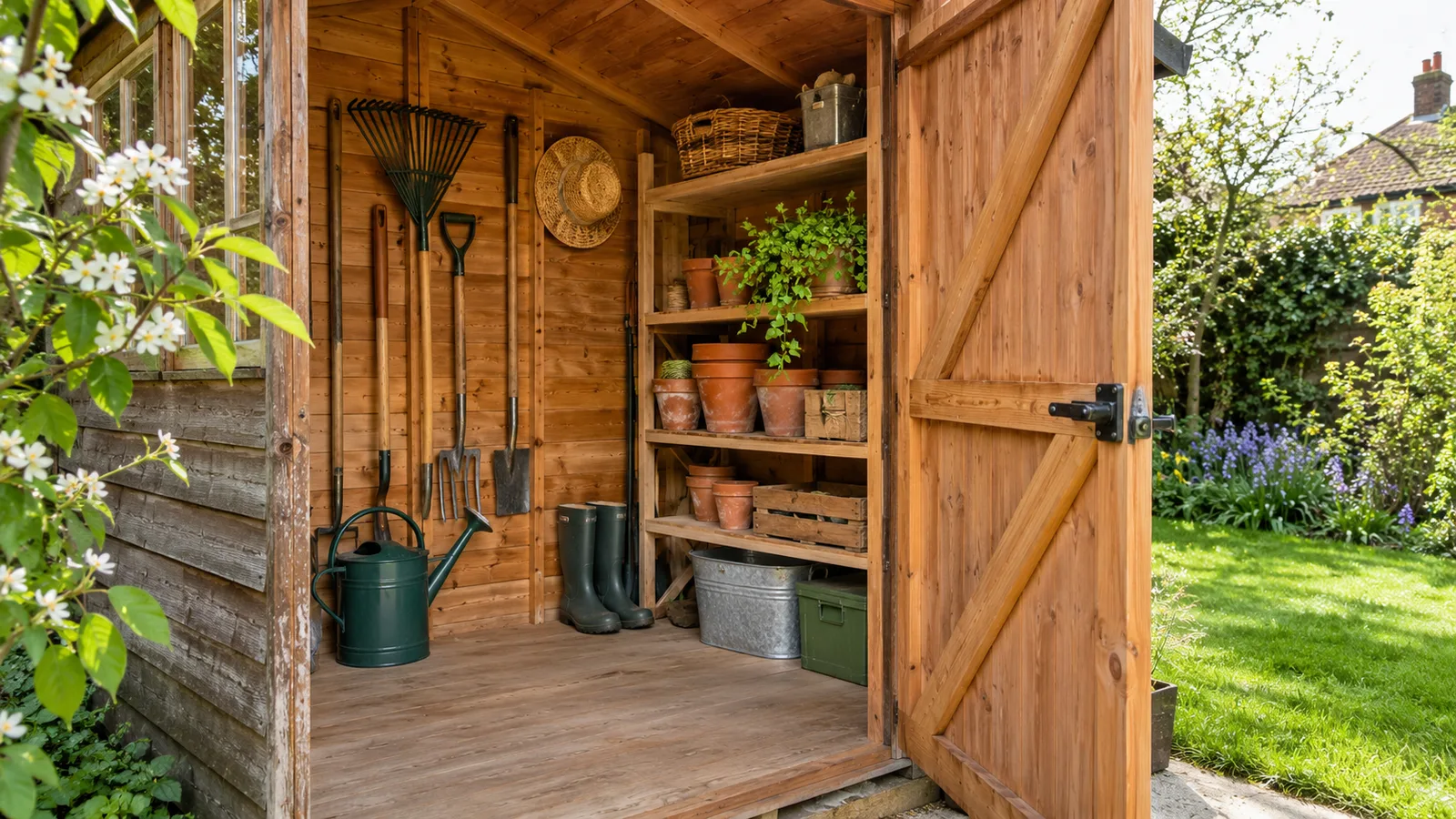
A practical shed cleaning checklist begins with checking for damp and unsafe items, then removing manageable belongings in sections, sweeping the floor, clearing reachable cobwebs and returning tools neatly. Doing this before the busiest gardening season makes the shed easier to use and helps you spot problems early.
Choose a dry day, and have gloves, a broom, dustpan and suitable cloths ready. Keep children and pets away from tools while you work. Do not handle unknown chemicals, damaged containers, heavy machinery or suspected asbestos.
What should you check before opening up the shed?
Look at the door, roof and floor for obvious damage. Check whether water has entered, whether shelves appear unstable and whether anything is blocking the entrance. If a structure looks unsafe, do not climb on it or attempt repairs as part of a cleaning session.
Open the door for fresh air, where safe, and take a moment to identify what is inside. Garden sheds often contain sharp hand tools, pots, compost bags, electrical accessories and occasionally products that require careful storage. Read labels and leave hazardous materials to appropriate guidance or specialists.
If the shed has widespread mould or persistent leaks, cleaning alone may not solve the problem. The underlying moisture issue needs attention.
How do you clean a shed step by step?
Work through one manageable area at a time. A smaller, completed section is better than scattering everything across the garden.
- Plan a safe temporary space. Keep moved items protected from rain and away from walkways.
- Move only manageable belongings. Group pots, hand tools and accessories as you go.
- Brush away reachable cobwebs. Avoid disturbing nests or wildlife.
- Sweep loose dry dirt. Start at the back and work towards the door.
- Wipe suitable accessible surfaces. Follow material and cleaning-product instructions.
- Check the area is dry. Do not put fabric or cardboard back onto damp surfaces.
- Return belongings in zones. Keep frequently used garden tools easy to reach.
If you find evidence of wildlife, pause and seek suitable advice before disturbing the area. Do not attempt hazardous material handling as part of a general clean.
What is the best way to organise garden tools?
Group tools by activity. Hand trowels, secateurs and gloves can live in one accessible area, with pots and trays in another. Longer tools should be stored securely so they cannot topple into the walkway. Use existing sound hooks and shelves only within their safe capacity.
Keep sharp edges guarded and away from children. Heavy bags belong low, where they can be handled safely. If the shed is very small, focus on a clear standing space and only the belongings needed for its main purpose.
The same principles work for a crowded garage organisation project, but a garden shed needs closer attention to moisture and changing weather.
How can you reduce damp and musty smells?
Check that water is not entering through obvious gaps and that the shed has the ventilation intended by its manufacturer. Do not block existing vents with stacked boxes. Keep suitable belongings away from persistently wet surfaces and avoid putting damp fabrics away.
Inspect after periods of heavy rain. A musty smell can indicate a moisture problem even when the floor appears dry. If you see extensive mould or structural deterioration, seek appropriate specialist advice rather than simply covering it with cleaning products.
Think carefully about what belongs in an outdoor shed. Paper records, delicate textiles and sentimental keepsakes may fare better in a suitable dry indoor space. For those items, our storage room organisation guide may be more helpful.
When should you clean a shed?
Spring and autumn are useful times for a more thorough check, as the tools and equipment you need often change with the season. Between these, a brief monthly sweep and tidy can keep pathways clear.
In spring, bring frequently used gardening tools forward. In autumn, check that belongings are dry and appropriately stored before colder, wetter weather. Keep the arrangement simple enough to maintain after every gardening session.
Key takeaways
- Inspect for moisture, damage and hazards first.
- Choose a dry day and work in small sections.
- Sweep and wipe only safe, accessible surfaces.
- Store tools securely using existing fittings.
- Check the shed seasonally and after heavy rain.
Common questions
Should I empty my shed completely?
Not necessarily. Cleaning in sections is often easier, especially when the garden offers little dry temporary space.
Can you clean a shed with mould?
Small amounts of ordinary dirt are different from widespread mould. Persistent or extensive mould needs proper assessment and moisture control.
Do I need new shelving to organise a shed?
No. Begin by grouping belongings and using sound existing storage. We do not install shelving.
Garage & Storage Cleanouts helps homeowners across the West Midlands with general shed cleanouts: we empty manageable belongings, clean accessible areas, organise what you keep and put it all back neatly. Packages start from £99, with other work individually quoted. Request a free quote if you would like help.