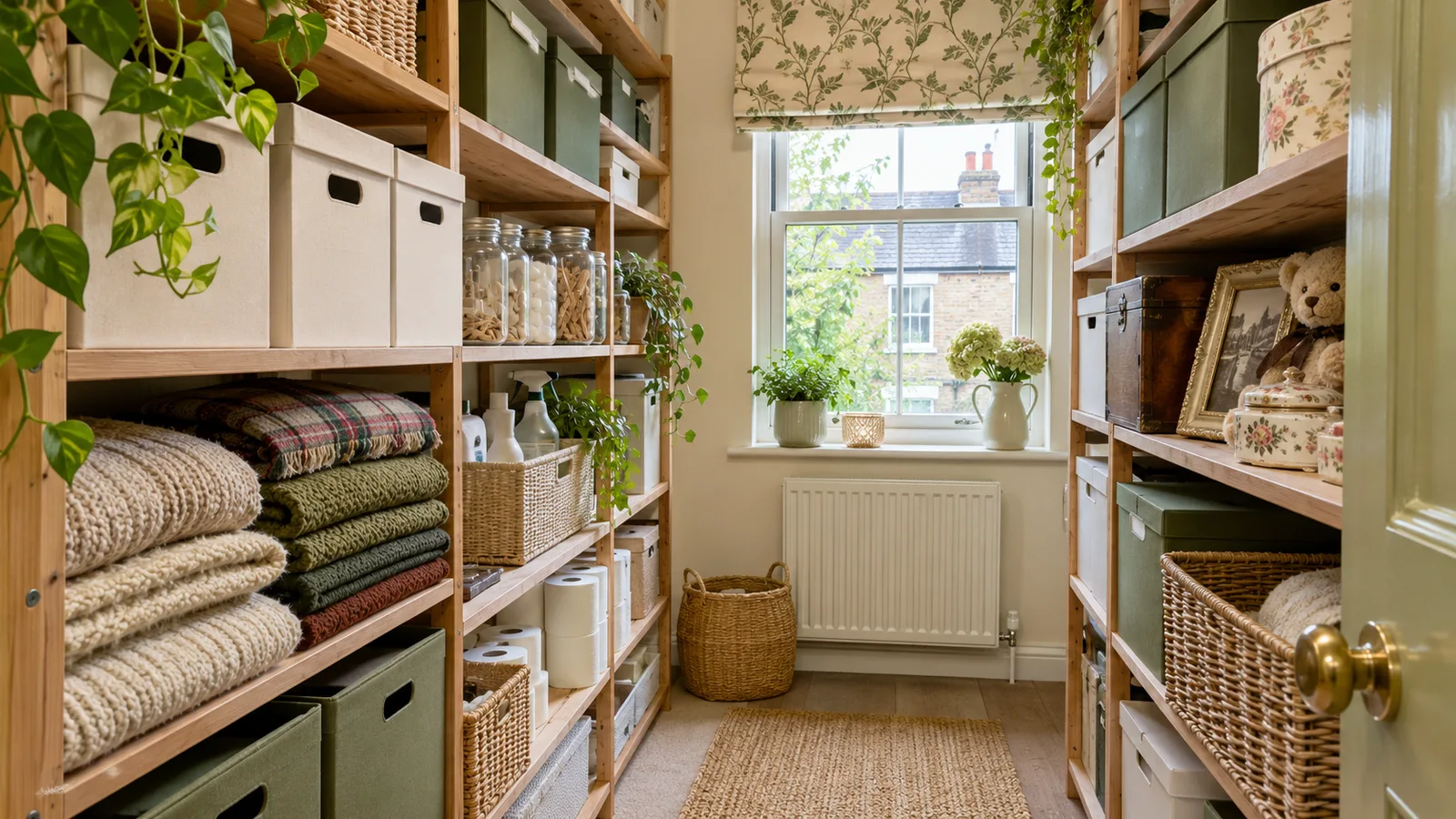
An organised storage room makes belongings easy to find without having to unpack several boxes. Start by grouping similar items, deciding which ones you need to reach regularly and placing them in clearly identified spaces using the storage you already own.
For a small box room, work through one shelf or corner at a time. Have a cloth, a pen, paper and a few existing containers ready. The aim is a storage room you can actually use, not just one that looks tidy in a photograph.
What should you do before rearranging a storage room?
Look at the room's shape, available shelving and how the door opens. Identify anything that obstructs a walkway or makes reaching a shelf difficult. Do not climb onto boxes or try to lift heavy or unstable stacks. Work within the space you can access safely.
Then decide the room's main purpose. Does it hold suitcases and seasonal decorations, clothes, household supplies or family keepsakes? Give the most important categories their own areas. Try to keep a clear route so you can reach the back of the room without shifting an entire pile.
If everything is already packed tightly, begin with just one accessible section. You can declutter in manageable stages using the same method, even though that guide focuses on garages.
How do you group things so they stay easy to find?
Keep belongings together by how you use them, rather than by whichever box happens to have space. Useful groups might include:
- Seasonal decorations and wrapping supplies
- Suitcases and travel accessories
- Spare bedding and household textiles
- Books, paperwork and keepsakes
- Items needed for particular hobbies
- Household supplies appropriate for indoor storage
Avoid a large “miscellaneous” category. It tends to become the place where things disappear. If you cannot decide where an item belongs, create a small review group and come back to it rather than interrupting the whole job.
Keep delicate and sentimental things separate from heavier everyday supplies. Check whether textiles, books or papers are showing signs of damp before packing them away. A damp space needs attention before more belongings are stored there.
Where should boxes and heavy belongings go?
Use sturdy existing shelving within its stated load limits. Heavy boxes belong on lower levels, with lighter and less frequently used items higher up if they can be reached safely. Never place unstable piles overhead.
Keep belongings away from damp surfaces where appropriate and allow air to circulate. Do not block vents, access panels or electrical equipment. Avoid putting fragile keepsakes beneath objects that may leak or fall.
If a storage room doubles as a spare bedroom or working space, leave enough usable floor area for that purpose. You do not need to fill every available centimetre. An empty section of shelf can be helpful because it gives newly returned items somewhere to go.
How can you label everything without making it complicated?
A good label answers the question, “What will I find inside?” Use specific everyday phrases, such as “Winter scarves”, “Photo albums” or “Spare pillowcases”. Put labels on the side that faces the walkway, not only on the lid.
Try this straightforward process:
- Group related belongings on a clear surface.
- Choose an existing container of a suitable size.
- Put heavier items at the bottom where appropriate.
- Write a short label describing the contents.
- Return the box to its agreed shelf or zone.
- Keep a short list for boxes containing important documents or keepsakes.
If family members also use the room, choose labels that make sense to everyone. You can use numbers as an extra reference, but they should not replace useful descriptions.
How often should you check a storage room?
A brief check every few months helps identify boxes that have been moved, seasonal items that need swapping and signs of damp or damage. After using something, return it to its labelled home. If a category consistently overflows, review how much space it needs.
The same principles work in an organised garage or shed, although each space has different conditions. For a fuller service overview, see our storage room cleanouts.
Key takeaways
- Organise by purpose and frequency of use.
- Keep clear access to the door and shelves.
- Store heavier belongings low and check shelf limits.
- Use specific labels that everyone understands.
- Review the room periodically, especially for damp.
Common questions
Do I need matching containers?
No. Safe, sturdy containers you already own are fine. Consistent labels matter more than matching colours.
What about items I am unsure of keeping?
Make a small review group and decide later. The choice is yours.
Can you organise a box room as well as a garage?
Yes. Garage & Storage Cleanouts works with storage rooms and box rooms containing manageable belongings across the West Midlands.
If your storage room needs more than a quick tidy, we can help empty manageable belongings, clean accessible surfaces, organise the items you are keeping and put everything back. Packages start from £99, with other work individually quoted. Request a free quote for your space.